

Thrasher Analytics Has Officially Moved To Substack
All premium content will now be published on this platform
Thrasher Analytics has officially moved all content to Substack. I’ve decided to upgrade the letter that’s been sent to financial advisors, hedge fund managers, private traders, and institutional strategists since 2018 from its own website to the Substack platform. This allows for an increase in publication frequency, better organized topics, easier access for subscribers to manage their accounts, and a lower price to subscribe.
Content to premium members will be sent throughout the week with updates on models, key charts, market commentary, and coming soon - stock/sector/factor screens for idea generation.
What Is Thrasher Analytics?
Through the use of price and volume dependent research (no emotions or estimating of earnings!) and with a focus on market volatility, sentiment, technical analysis, and fund flows, Thrasher Analytics provides proprietary models and timely tactical commentary on financial markets and macro-economic developments.
Subscribers get consistent updates on:
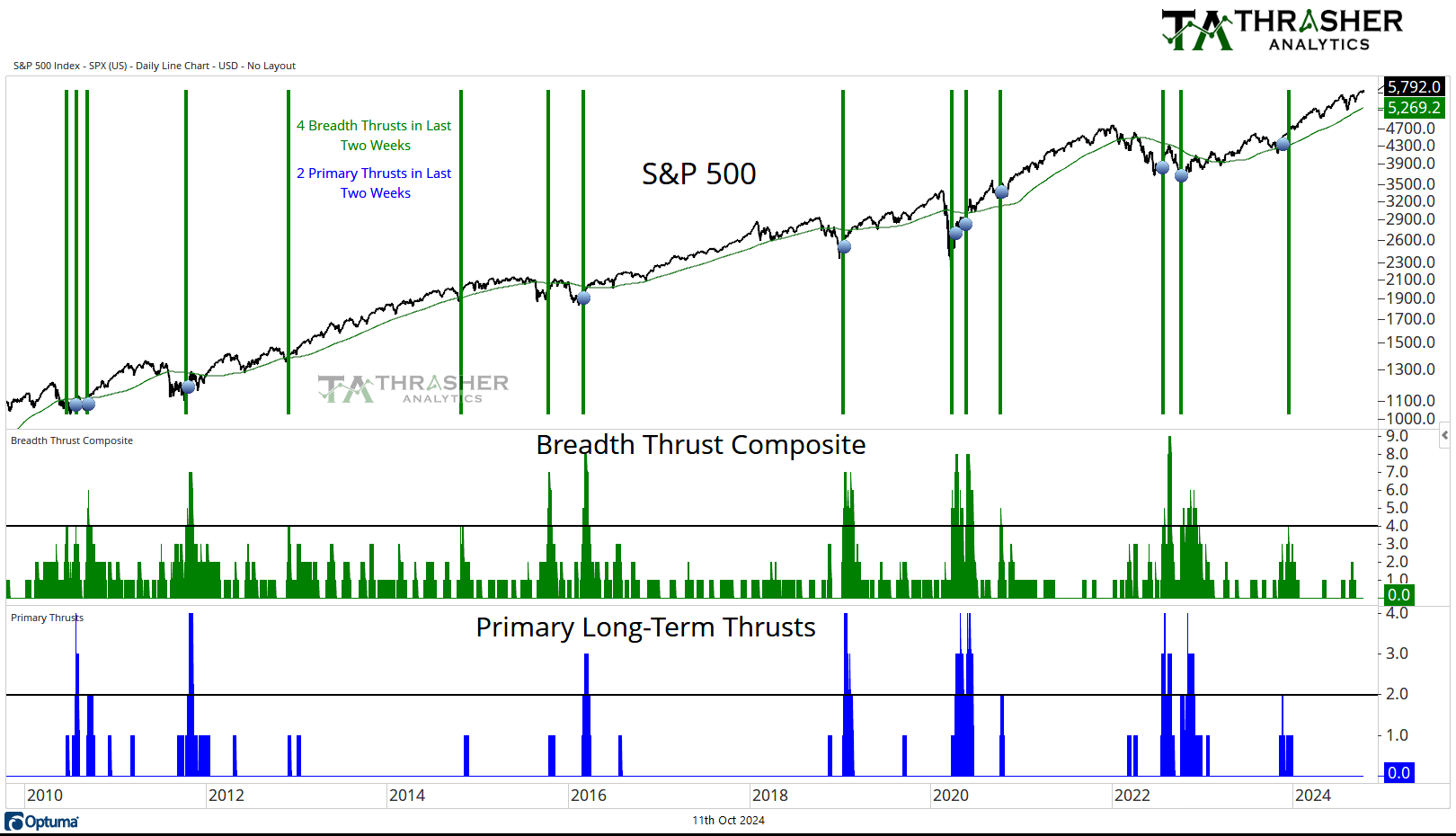
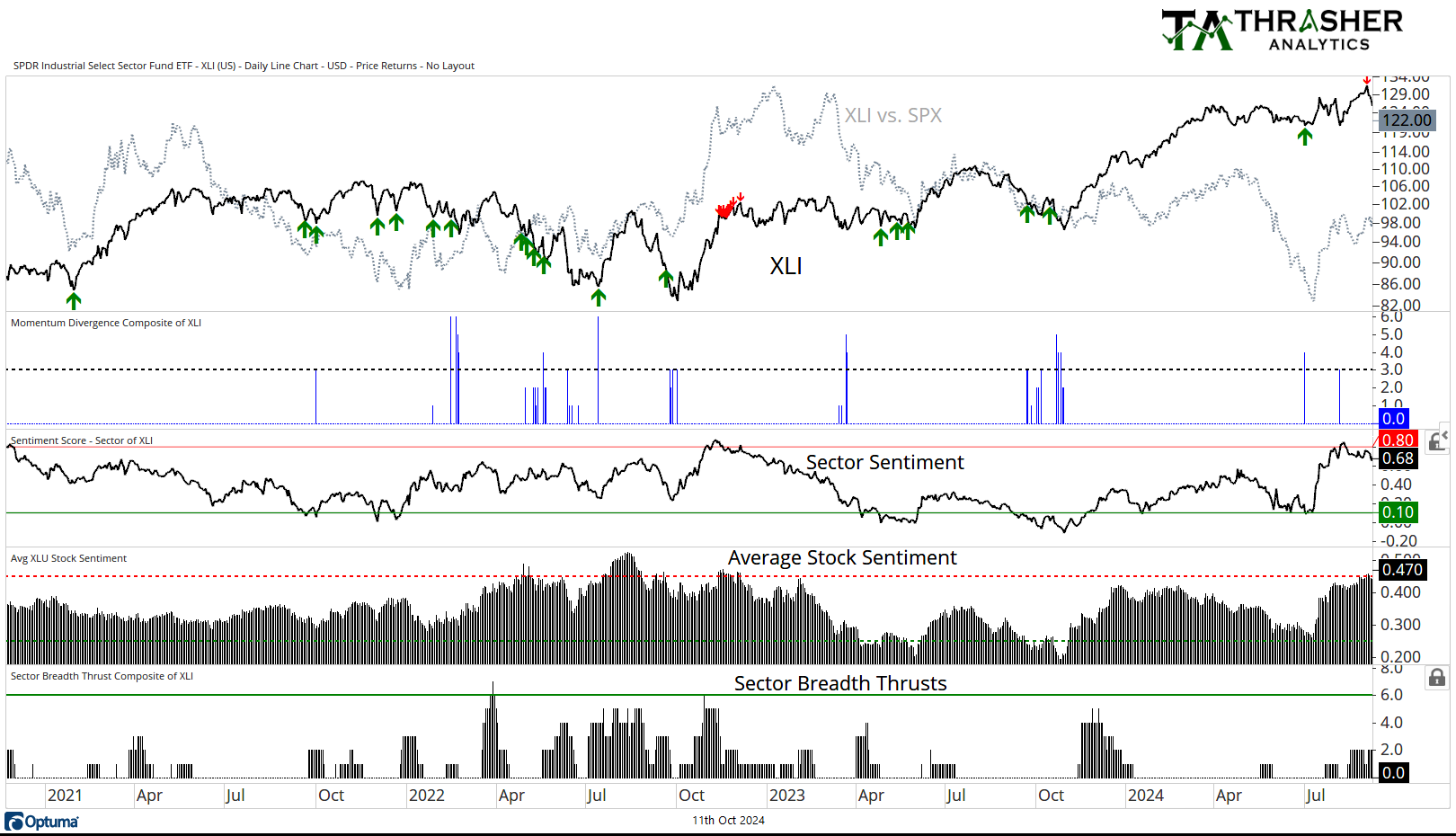
Breadth Thrust Composite - A collection of multiple breadth thrust indicators based on different indices that incorporate price and volume to mark when extremely strong buying activity is taking place by the movement of individual stocks. When multiple of these thrusts occur in a short period of time, the reaction in the S&P 500 has historically been positive going forward.
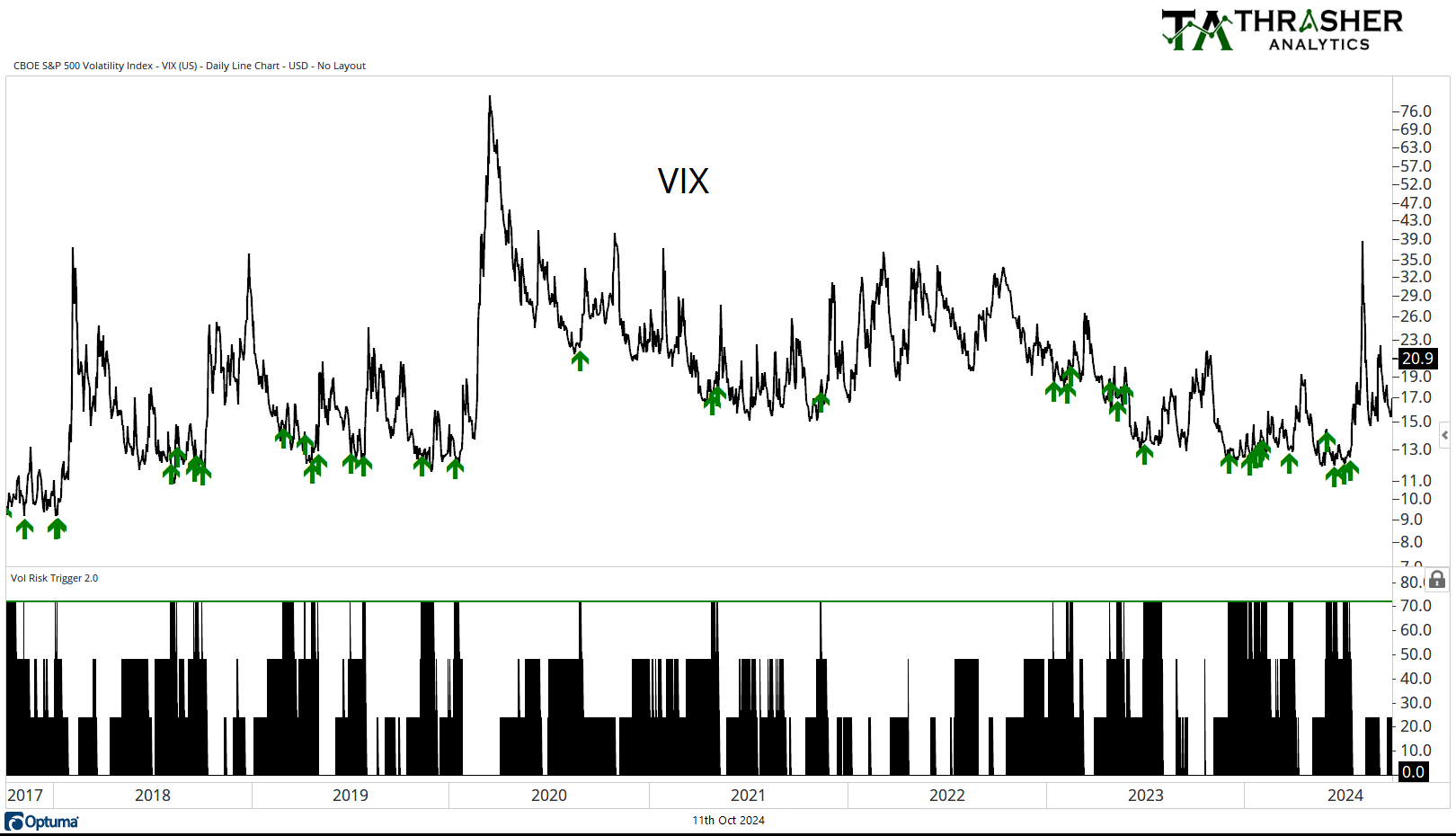
Volatility Risk Trigger - A model based on award-winning research combined with market-derived “symptoms” that have led to large swings in the Volatility Index.
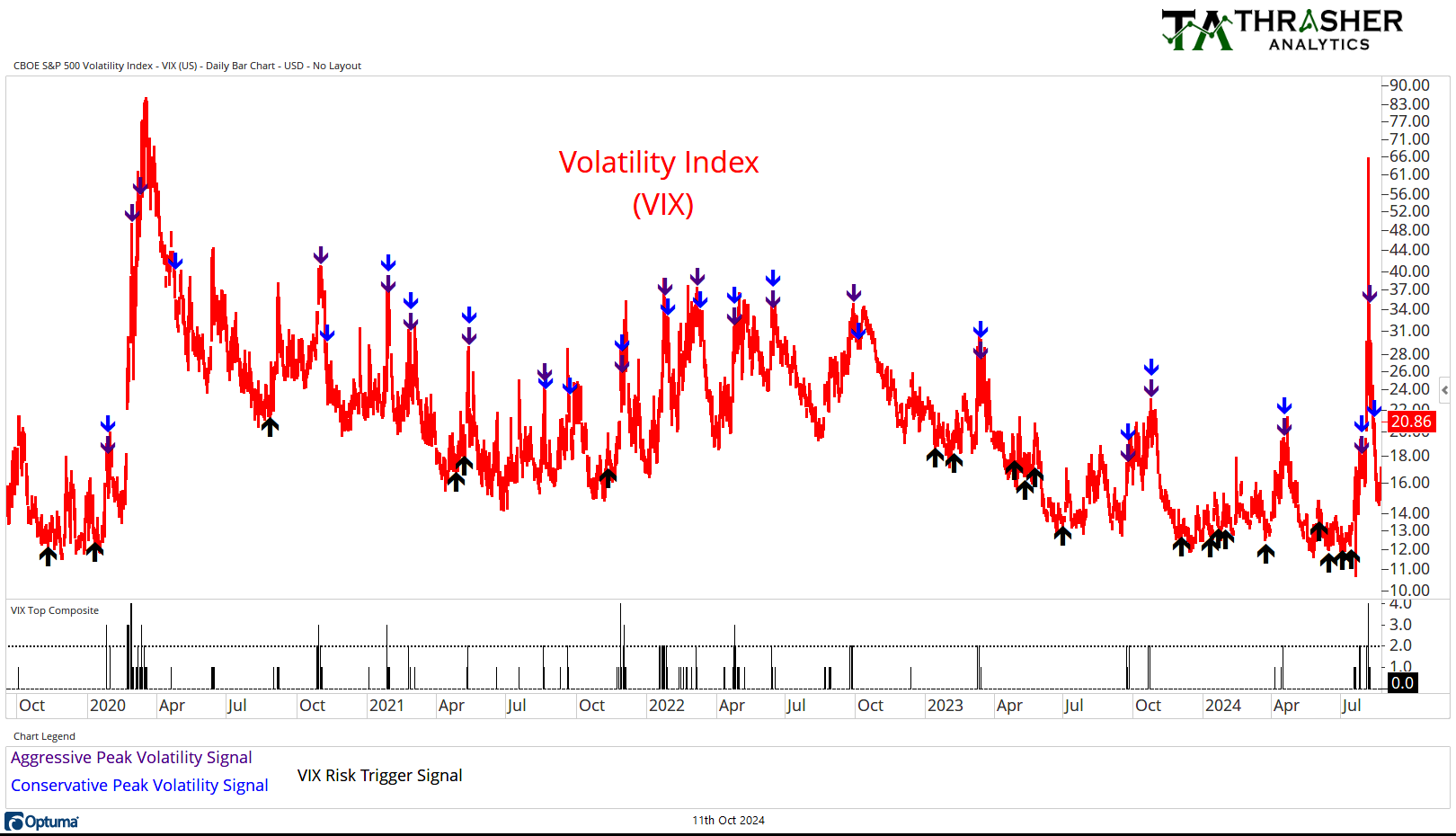
VIX Top Signals - A composite of several variables that historically mark the peak in the Volatility index and signal volatility is likely to move lower.
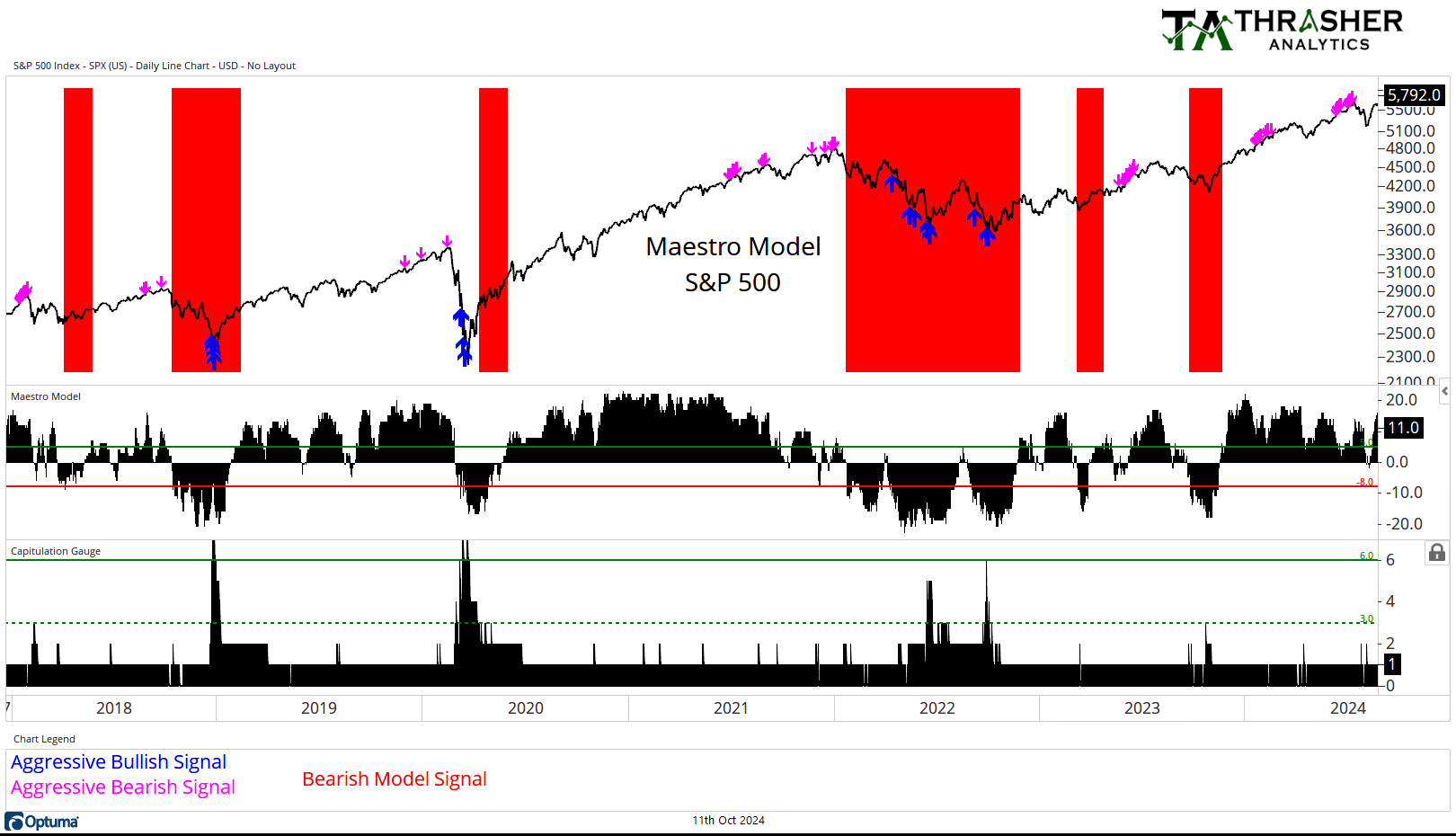
Maestro Equity Model - Incorporates three market-based categories: Breadth, Trend/Momentum, Sentiment/Volatility, & Economic (price-based data that is economically sensitive), into a single composite that provides a quantitative score for the health of the market. Paired with a Capitulation Gauge, the Maestro Model produces both Aggressive and Conservative signals for the U.S. equity market.
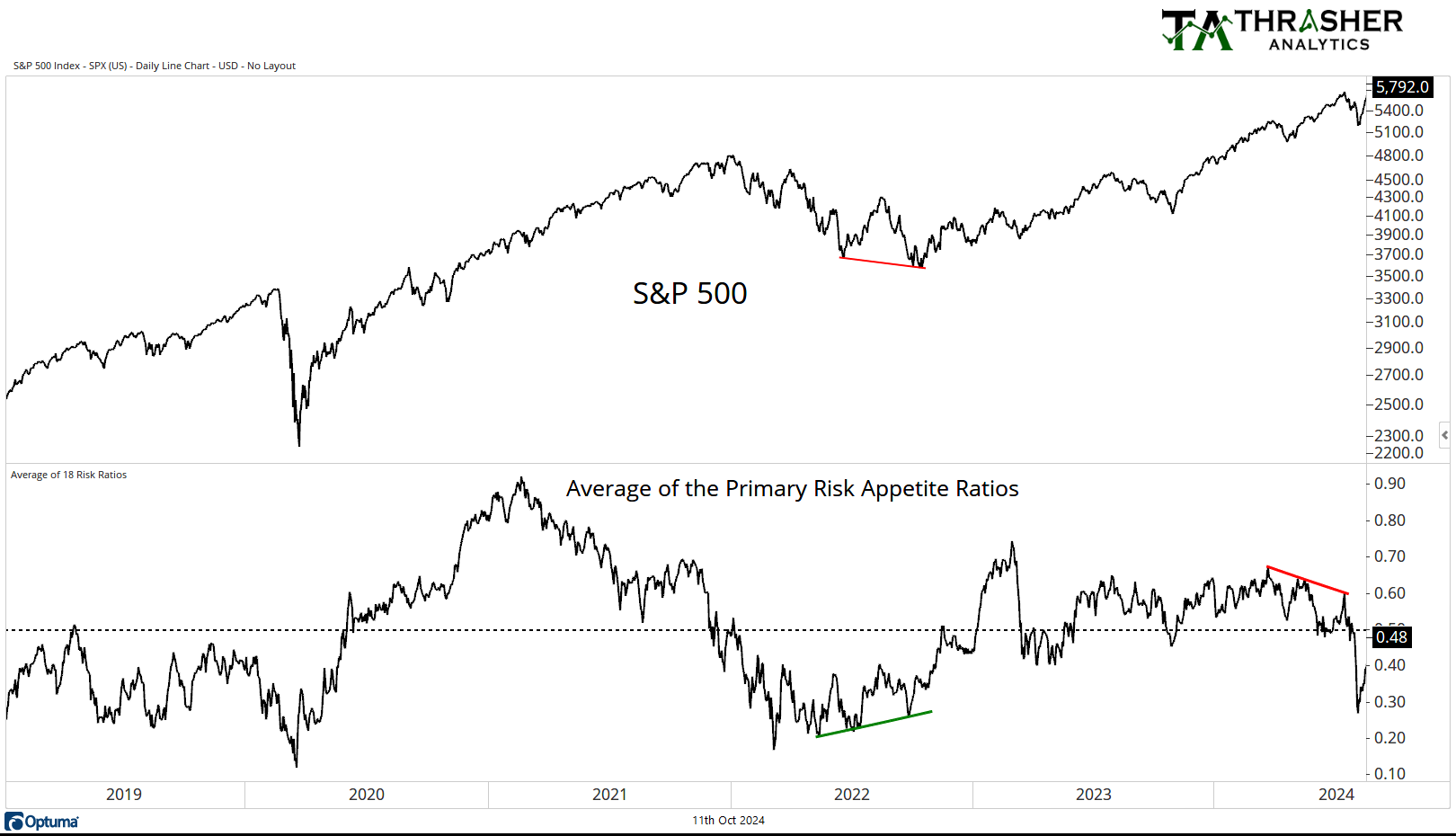
Risk Appetite Model - By evaluating multiple risk ratios from equity, forex, fixed income, and commodity markets we can begin to see trends of increasing or decreasing investor risk appetite. These ratios are shown each week through a heatmap, indicating their increasing or decreasing values.
Equity Trend Strategies - Long-term evaluation of the trend of equity sectors and major indices based on price changes and breadth data.
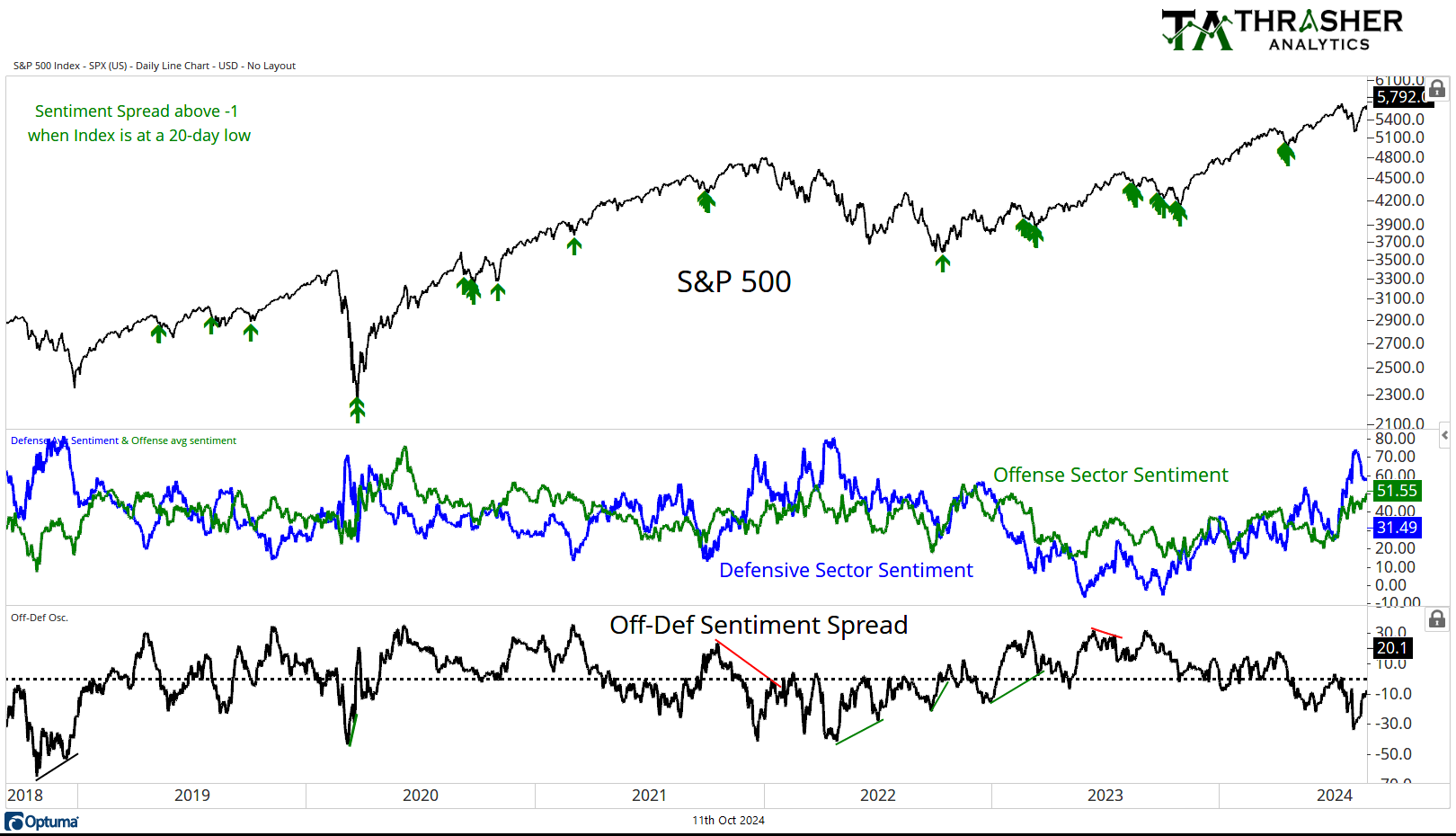
Proprietary Sector Sentiment Indicators - Using data derived from changes in price and volume, sentiment of each sector is quantitively scored.
Curated Charts & Commentary - Each week I share the charts along with my commentary, that I believe are important and meaningful for the current market environment. These will include commodities, sectors, factors, fixed income, equity asset sizes, international and domestic markets, and currencies.
Who Writes Thrasher Analytics?
Andrew Thrasher, CMT, the founder of Thrasher Analytics LLC, also serves as the Portfolio Manager for an Indiana-based wealth management firm. Mr. Thrasher holds a bachelor’s degree from Purdue University and the Chartered Market Technician (CMT) designation. A two-time Charles H. Dow Award winner. First, in 2017 for his research paper titled, “Forecasting a Volatility Tsunami” and again in 2023 for his paper, “The 5% Canary” which also won the Founders Award from the National Association of Active Investment Managers (NAAIM). Andrew was also a finalist in the Best Equity Research and Best Commodity Research categories for Technical Analysis awards in 2022. Mr. Thrasher is often cited in financial press for his market-related and technical analysis insights and can be found on Twitter, @AndrewThrasher .
Examples of Some of the Charts & Models Shared at Thrasher Analytics:
Thrasher Analytics LLC is not registered as a securities broker-dealer or an investment adviser either with the U.S. Securities and Exchange Commission (the “SEC”) or with any state securities regulatory authority. The information contained in our reports, newsletters, or other produced content should be viewed as commercial advertisement and is not intended to be investment advice. The information contained in our report is not an offer to buy or sell securities.